Say you need to transport temperature-sensitive goods across Australia. Or you need temporary storage for your inventory that requires an environment with consistent temperature. Maybe you have an event and need a controlled environment for your food.
Whatever it may be, one thing’s for sure: you need a proper shipping container with temperature control.
The question now is, do you need an insulated container? Or do you need a reefer container?
What Is an Insulated Shipping Container?
One simple distinction is that an insulated shipping container doesn’t require an external power source to work. Its insulated walls simply block the heat absorbed by the steel structure of shipping containers.
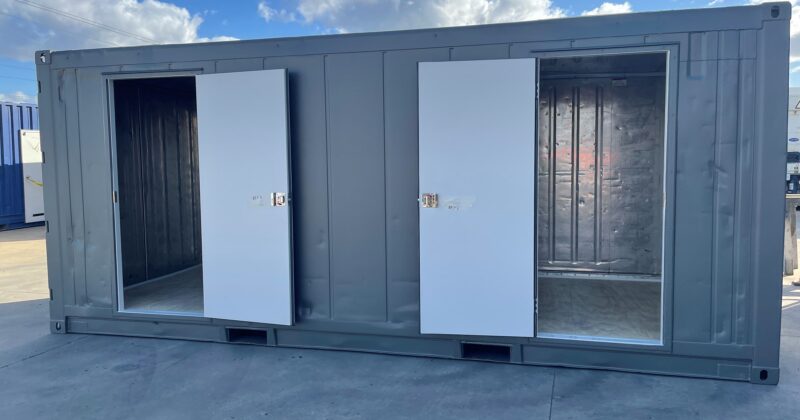
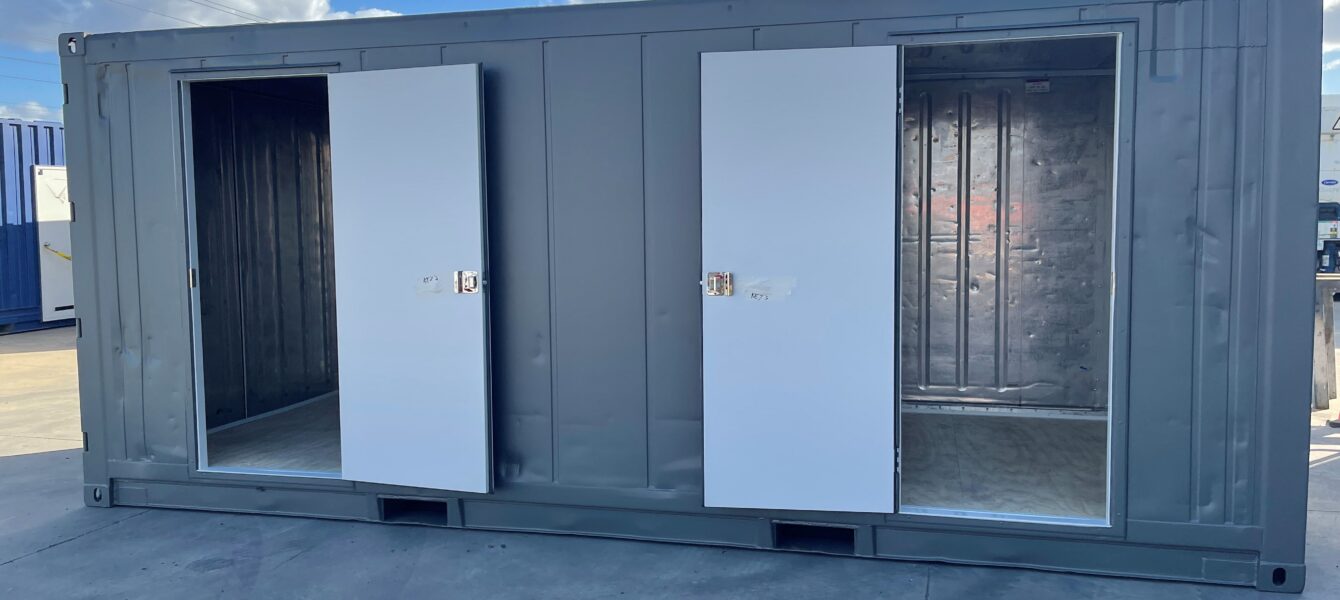
Think of an insulated shipping container as a storage solution for protecting your sensitive cargo from spoilage. Unlike standard shipping containers, insulated containers are fully sealed and double-walled, with high-quality insulation on the walls.
Those walls are usually made up of either polystyrene, polyurethane foam, or fibreglass, which prevent heat transfer. Like a massive esky without the ice. As a result, insulated containers maintain a stable ambient temperature range regardless of the temperature variations outside it.
What Is a Reefer Container (Refrigerated Container)?
“If that’s an insulated shipping container, then what is a reefer container?” Good question, we’re glad you asked.
Also known as refrigerated shipping containers, reefer containers are used to transport perishable products. Food, pharmaceuticals, anything that needs to be transported at a set temperature.
Unlike insulated containers that don’t have an external power source, refrigerated reefer containers come with refrigeration units run by a power supply for more precise temperature control compared to insulated shipping containers.
How Reefer Containers Work
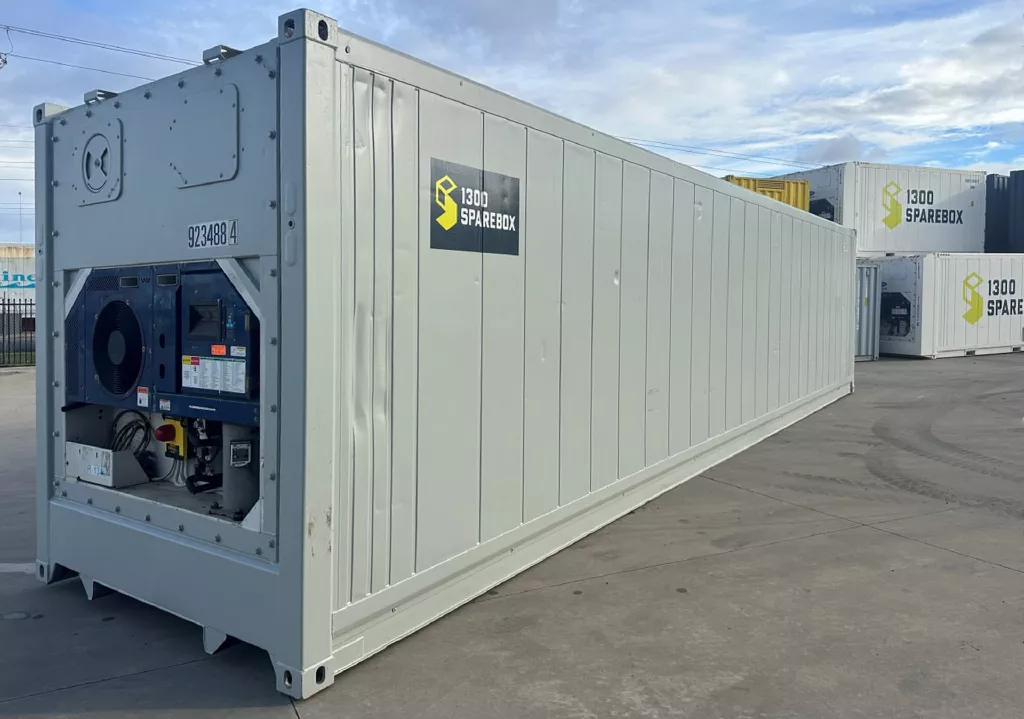
Reefer containers use outside air for cooling the interiors. They have refrigeration units that consist of vents, a condenser, a compressor, an evaporator, and sensors that require a power source to run. And you set your desired specific temperature of the container via the control panel.
Typically, the refrigeration unit blows air inside the container upwards through the floor. This proper airflow, the container’s insulated walls, and the temperature of the cargo interact to create chilled air that preserves the cargo inside the container.
Most reefer containers have a cooling system that has a temperature range between-30°C to 30°C.
Insulated Container vs Reefer Container: What’s the Difference?
Both refrigerated and insulated containers have the same principal function, which is to extend the shelf life of cargo. But the key difference between a refrigerated vs insulated container is in how they maintain the internal temperature of the container.
Insulated containers rely on the initial temperature of the cargo as the baseline. Then, the two-layered, vacuumed walls help prevent extreme temperature fluctuations inside. This allows the container to maintain a specific temperature range for a limited time.
So, the insulated walls prevent the container from acting like a thermal blanket; there’s minimal heat transfer compared to ordinary storage containers. With this passive cooling, there’s zero energy consumption.
Meanwhile, reefer containers are equipped with a refrigeration system for strict temperature control.
Say you need to transport temperature-sensitive cargo requiring a -30°C environment. Set it up via the control panel, and the refrigeration unit will ensure the container’s internal temperature is maintained at that specific temperature throughout the shipping process.
Need guidance? Contact our friendly team today and we’ll help you go over your requirements. Get a quote.
Refrigerated vs Insulated Containers: Which One Do You Need?
Choose an insulated shipping container when you need:
- A cost-effective option since it involves passive cooling
- Zero energy consumption since its built-in cooling system doesn’t need a power source
- You only need to maintain temperature for short-term storage or transport
Choose a refrigerated shipping container if you want:
- The ability to set specific temperatures for your perishable goods
- The capacity for actively cooling the container since it has a refrigeration unit
- To also use the storage container as a refrigerator or freezer for longer periods
Common Uses for Insulated Shipping Containers
You’ll typically find insulated containers being used for:
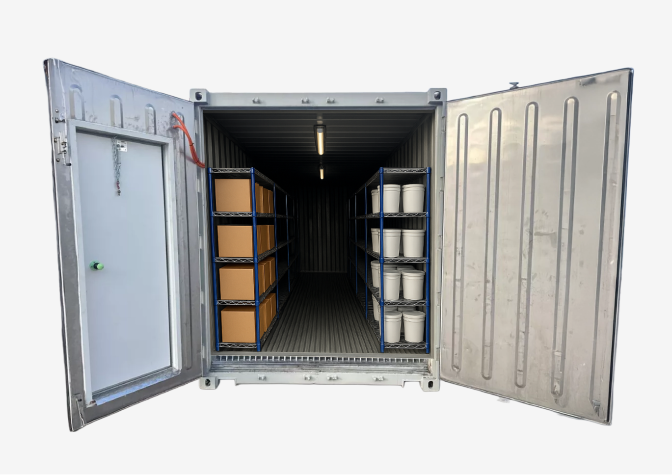
- Storing or transporting heat-sensitive items, including temperature-sensitive electronic equipment
- Short-term storage for perishable goods, such as in the food and beverage industry
- Transporting perishable goods over short distances where a power source is unavailable
- Temporary storage for seasonal items, like seeds, crops, and farming equipment
Common Uses for Reefer Containers
Refrigerated containers are often used in:
- Temperature-critical transport, like in the pharmaceutical industry
- The delivery of perishable goods such as frozen food and fresh produce
- Safe transport of temperature-sensitive chemicals
- Back-up storage for items requiring temperature control
Pros and Cons of Insulated Containers
Lower costs, both upfront and down the line, are involved with an insulated container vs a reefer container. And you don’t need to rely on a power source for it to function.
However, the absence of a refrigeration unit you have limited control over the temperature inside the container. This means you can use it at optimal conditions for shorter periods and distances.
Pros and Cons of Reefer Containers
Powered refrigeration with a reefer container means you have full control over its temperature—you just need to set it up and it’ll work for as long as you want to or until you reach your destination. This makes refrigerated containers ideal for use in global trade.
But it comes with a higher cost, both upfront and over time, since refrigerated containers require power and maintenance to work seamlessly. This also means there’s always the risk of mechanical failure when you use it, which will then affect your cargo.
How to Choose the Right Container for Your Needs
Perhaps you still don’t know which one to choose between refrigerated vs insulated containers. To help you decide, ask yourself these questions:
- What are you storing? If it’s simply heat-sensitive, insulated containers are often enough. But for highly perishable items or temperature-sensitive products, choose refrigerated containers.
- How long for? Insulated containers are adequate for short-term use, while reefer containers are for long-term.
- What’s my preferred budget and setup? Choose insulated containers if you want the cheaper, straightforward option. Go for the more expensive refrigerated containers if you require more advanced features like better temperature control capabilities.
Why Choose 1300Sparebox for Insulated and Reefer Containers
We at 1300Sparebox can provide you with a range of options for your storage container needs. We offer not just 20 ft to 40 ft insulated containers or 10 ft to 40 ft reefer containers of different sizes. We also have other types of shipping containers to suit your various needs.
Plus, you can choose from new and used storage containers so you can find one that’s within your budget. For instance, our used containers for sale starts at $5,000 (excluding GST). You can also hire a container for as little as $20 a day.
Contact us to get the most ideal container solution for your needs and get the latest pricing.