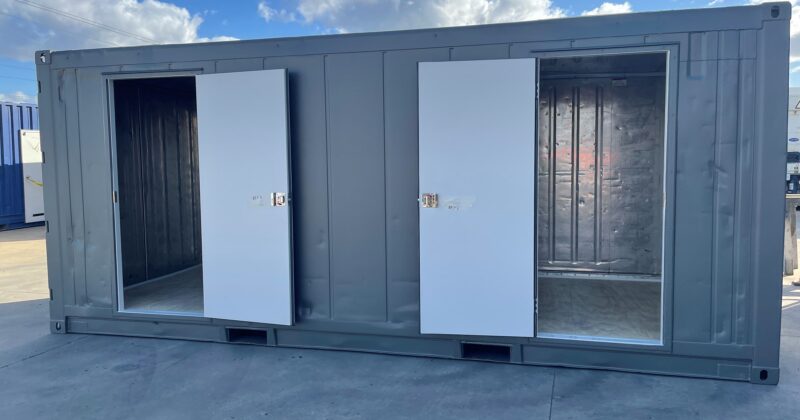
Say you need to transport all your inventory across Australia. But you’re not sure which is the best choice between high cube vs standard containers. After all, you have to consider not just the rent for a unit but also all the logistics involved.
It’s time to gain clarity and know which shipping container is right for your needs – including your budget.
What Is a Standard Shipping Container?
Also known as a GP or general purpose container, a standard shipping container is a steel structure used for storage, transporting goods, and other purposes. These are the regular containers you’ll typically see on the road that are loaded onto large trucks, as well as on trains and ships, for both local and global trade.
Common Uses for Standard Shipping Containers
- General storage, like personal belongings, vehicles, and business files
- Transporting cargo and business inventory
- Moving houses or transferring business
- Additional usable spaces, like site offices, stock room and office on construction sites
- Enclosed space for live events, like makeshift kitchens and temporary offices
Pros and Cons of Standard Containers
Among the pros of using standard containers are:
- Lower cost
- Easier transport
- Better container availability
The cons of using standard containers include:
- Limited vertical space, so not all tall or bulky items may fit
- Fewer goods can be loaded compared to high cube containers
What Is a High Cube Container (HC Container)?
A high cube shipping container, or HC container, is essentially the same as a standard container but has extra headroom. It’s the taller version.
High cube containers also have a superior version called the HQ container. Unlike the HC container, the HQ container is built using more durable materials, and the empty shipping container must pass more stringent testing before usage.
Common Uses for High Cube Containers
HC containers essentially serve the same function as standard shipping containers, but with fewer limitations. This allows you to:
- Store and transport bulky, tall, oddly-shaped items like heavy farming and construction equipment
- Use them as fit-outs or tiny homes
- Turn it into temporary storage space where there’s room to install extra shelving
- Modify it for use as offices, shops, workshops, and dining spaces
Pros and Cons of High Cube Containers
Among the pros of using high cube containers are:
- Extra storage height, so more cargo gets loaded
- Can easily fit tall and irregularly-shaped goods
- Better for conversions since there’s more headroom for people to move around
The cons of using high cube containers include:
- Higher costs
- More logistical limitations and considerations because of its added height and resulting higher maximum gross weight
High Cube vs Standard Container: What’s the Difference?
Height comparison
The shipping container width and depth are the same, but the key difference between standard vs high cube containers is the additional vertical space. Specifically, the high cube version is a foot taller compared to a general purpose container.
Internal Capacity
More room in both the HC container and HQ container means more cargo to store or more usable space for you.
But the greater internal height doesn’t only give you extra space and the ability to load taller items that won’t fit standard containers. You also get more opportunities for modifying it to meet your needs.
Say you’ll use it as a portable office. You’ll have more room not just for your files and equipment, but also be able to install overhead lights and shelving without you feeling cramped as stay there and work. Imagine raising your ceilings at home by 30 centimetres? That’s the sort of difference.
Visual and Structural Differences
Visually, the greater external height is the key difference between high cube vs standard containers. On its own, you may not be able to distinguish one from the other. But side by side? That’s when you’ll see the big difference: the high cube version is noticeably taller.
Structurally, the HQ container is more durable. Aside from its superior construction, it also often comes with reinforcements and extra features like improved insulation and seals.
Standard vs High Cube Containers: Size and Dimensions
The most commonly used standard shipping containers and high cube containers—the 20 ft and 40 ft containers—have a standard width of 8 feet. It allows the containers to be uniformly and securely stacked via the corner castings and to be transported.
The dimensions of 20 ft and 40 ft containers are the same, save for the extra foot of height for high cube containers.
Standard shipping container dimensions are:
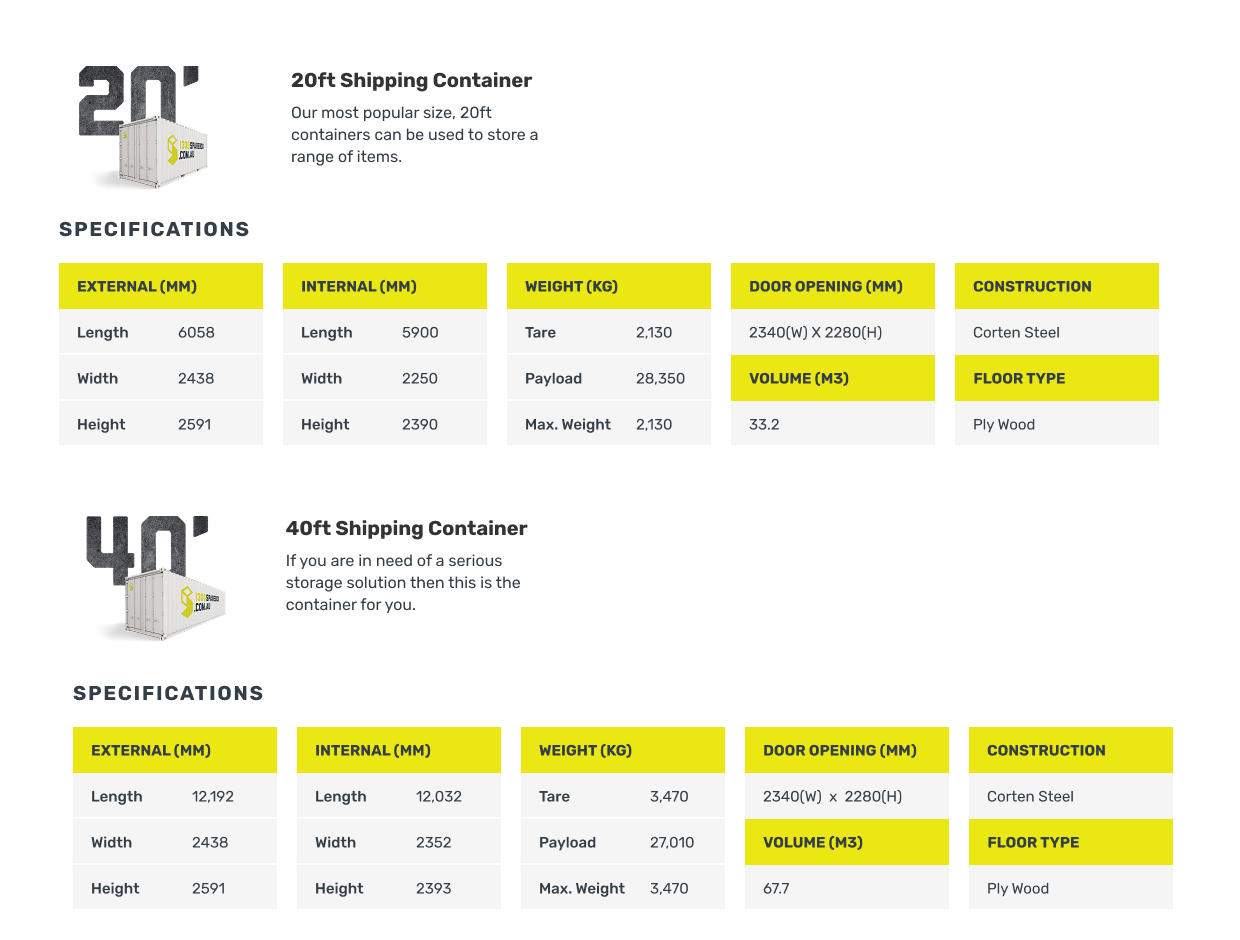
Standard Shipping Container Dimensions Explained
Whether it’s a 20 ft or 40 ft container, the lengths and widths of both high cube and standard containers are the same. It’s the shipping container heights that are not.
A general purpose container not only has less space available but also a smaller door opening. This limits you to loading items that are less than 8.6 feet high—unless you’ll be placing them horizontally just to fit.
High cube shipping container dimensions are:
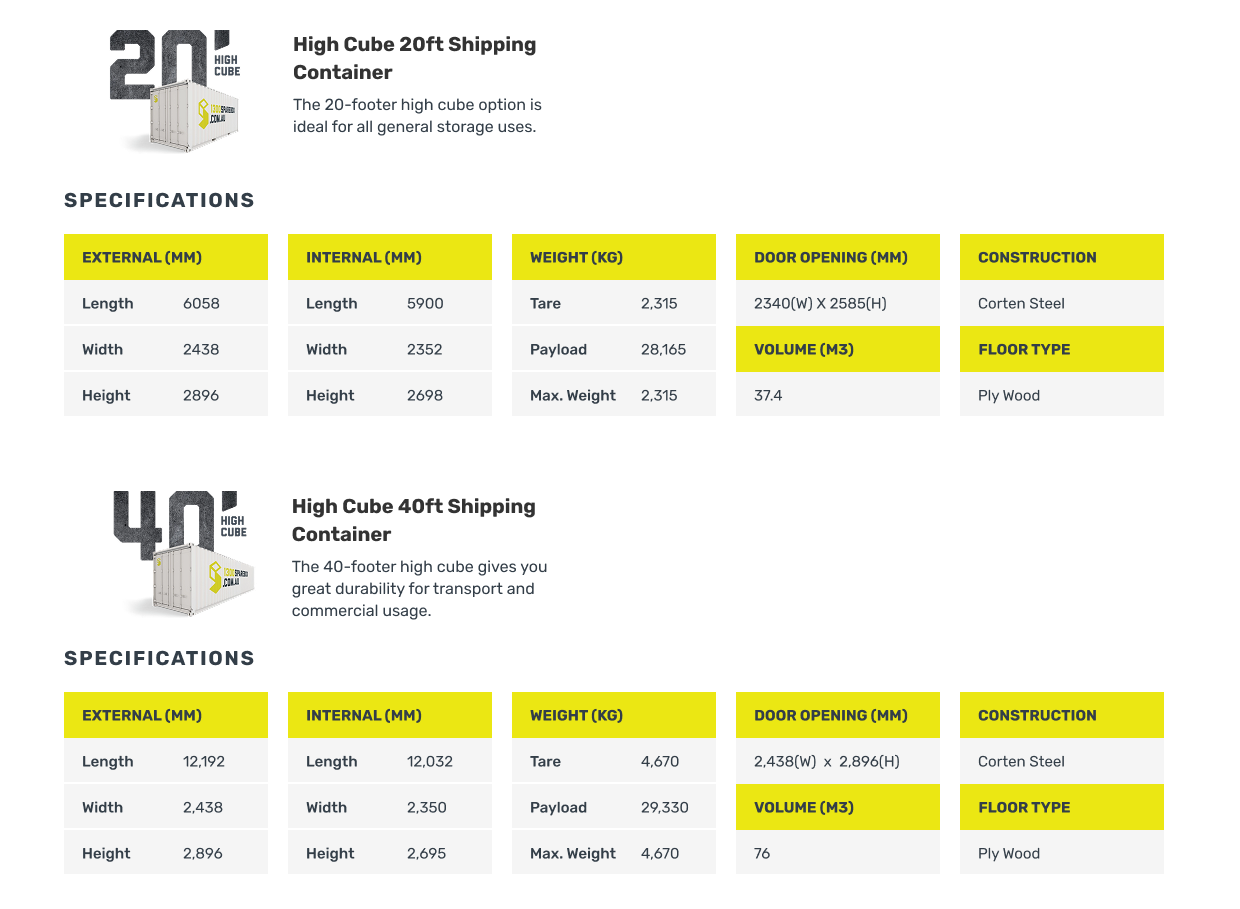
High Cube Container Dimensions Explained
With high cube containers being larger, this means they have higher container weights and more payload capacity. For instance, a 40 ft standard container weighs 3,750 kg and has a payload capacity of around 27,600 kg. Meanwhile, the high cube version weighs 3,900 kg and has a 28,600 payload capacity.
The extra height of 1 foot in high cube containers vs regular containers can make all the difference for many users.
If you’re using shipping containers as a storage unit, that means fewer space constraints for you. Not only can you store more cargo, but you can even place bulky items inside, like tall machinery.
And aside from being a storage solution, an HC container can also be used as an extra physical space for businesses, like site offices and pop-up shops.
High Cube vs Standard Containers: Which One Should You Choose?
The most important consideration is:
How tall are the items you’re loading into the shipping container?
In most cases, a standard container is enough for the storage and transport needs of most users. Plus, you can ship and install GP containers in various sites with fewer limitations.
But if you’re loading large, tall, and irregularly-shaped goods, choose a high cube container. It’s also ideal if you need to load extra cargo that’s beyond the capacity of what GP containers can hold.
Note that the extra vertical space of an HC container means it may require the use of modified transport equipment, since most are only compatible with standard containers. Transporting them also has limitations, such as ensuring the roads it will traverse have a vertical clearance that’s above 9.6 feet.
While the upfront costs of buying or renting HC containers are higher vs standard containers, consider as well your potential expenses.
Getting a high cube shipping container might be more expensive at first. But if you need to transport a huge amount of cargo, it may cost you less in the long run compared to getting a GP container.
For instance, it may take you just one trip with an HC container to transport all your stocks. Meanwhile, with a standard container, the same route can take you two trips. Plus, there’s wasted space on the GP container during the second trip.
Why Choose 1300Sparebox for Standard and High Cube Containers
We at 1300Sparebox can provide a shipping container that’s right not just for your needs but also your budget and deadlines. Aside from both new and used container units, we also offer units for rent if you’ll only need one—or more—temporarily.
Our shipping container options are not just the usual 20 ft and 40 ft sizes for both container types. We also have 6 ft, 8 ft, and 10 ft options for regular containers and 21 ft and 22 ft options for high cube refrigerated containers.
But if you’re still unsure which is the most practical option for you between a high cube container vs a standard unit, contact us. We’d love to help you decide and share with you the best deals we have for our units. Get a quote today.